Disclosure: we may earn a commission from qualifying purchases at no extra cost to you. As an Amazon Associate I earn from qualifying purchases. Learn more.
Late summer brings ripe melons, and for a lot of people with hay fever it also brings an itchy mouth after a slice of cantaloupe or watermelon. If that sounds familiar, ragweed pollen may be the connection. Ragweed is one of the most common weed allergies in the U.S., and it’s one of the main causes of oral allergy syndrome, also called pollen food allergy syndrome (PFAS).
This guide explains which foods cross-react with ragweed, why melon is a special case, how the fall ragweed season makes reactions worse, and the warning signs that mean you should get medical help. For the bigger picture, see our overview of oral allergy syndrome.
Key takeaways
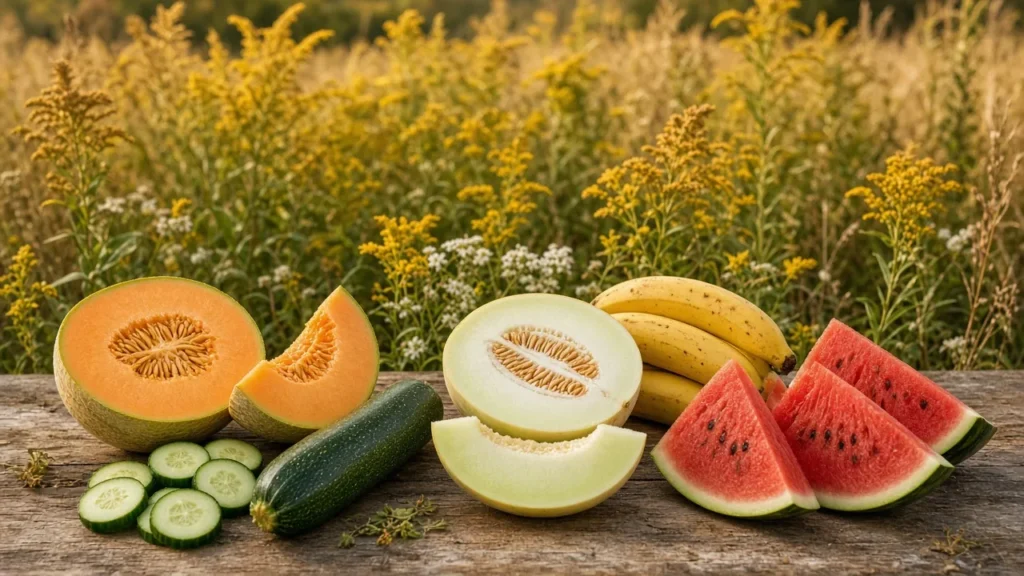
- People allergic to ragweed may react to banana, cucumber, melons, sunflower seeds and zucchini (ACAAI).
- Ragweed is one of the pollens behind many PFAS food reactions (AAFA).
- Weed pollen, especially ragweed, peaks in late summer and fall, when food reactions often get worse (AAFA) (AAAAI).
- Melons are hard to eat cooked, so many people simply skip them when symptoms are bothersome (ACAAI).
- Any reaction beyond the mouth, or trouble breathing, needs emergency care (MedlinePlus).
How Ragweed Is Linked to Food
When you’re allergic to ragweed, your immune system overreacts to specific proteins in its pollen. Some fruits and vegetables contain proteins with a very similar structure. When you eat them raw, your immune system can confuse them with ragweed pollen and set off an itchy reaction in your mouth and throat. This is called cross-reactivity (AAAAI).
AAFA notes that ragweed, along with birch and alder tree pollen, causes many PFAS food reactions (AAFA). It’s the main weed pollen behind oral allergy syndrome, just as birch is the main tree.
Foods That Cross-React With Ragweed
ACAAI lists these foods as commonly associated with ragweed pollen allergy (ACAAI). AAAAI names a similar group: banana, cucumber, melon and zucchini (AAAAI).
| Food | Notes | Easier option |
|---|---|---|
| Melons (cantaloupe, honeydew, watermelon) | The most common ragweed trigger; usually eaten raw | Often easiest to skip during ragweed season |
| Banana | Usually eaten raw | Baked into bread or muffins |
| Cucumber | Raw in salads and pickled | Peeled, or cooked in recipes |
| Zucchini | Often eaten raw in salads or noodles | Roasted, sauteed or baked |
| Sunflower seeds | Snacks, trail mix, salad toppers | Ask an allergist if seeds cause symptoms |
Not everyone with a ragweed allergy reacts to these foods, and some people react to just one (ACAAI). MedlinePlus also lists melons among foods whose proteins resemble pollen proteins (MedlinePlus). Melons can show up on more than one list: AAAAI and ACAAI also include melons as a grass pollen food (AAAAI). If you’re allergic to both grass and ragweed, melon may be a trigger for much of the year. See our guide to grass pollen food allergy.
Symptoms to Expect
A ragweed-related food reaction usually looks like other cases of oral allergy syndrome: an itchy mouth, a scratchy throat, or swelling of the lips, mouth, tongue and throat. Some people get itchy ears or hives around the mouth (ACAAI).
- Itchy or tingly lips, tongue and throat after raw melon or banana
- A scratchy throat
- Mild lip or tongue swelling
- Itchy ears
Symptoms usually start right after eating and fade quickly once the food is swallowed or removed (AAAAI) (ACAAI). Most reactions stay mild, but AAAAI notes OAS can rarely cause severe throat swelling and, very rarely, anaphylaxis in highly allergic people (AAAAI).
When it’s an emergency
Call 911 right away if a food reaction spreads beyond your mouth or comes with trouble breathing or swallowing, throat tightness, a hoarse or whispered voice, hives across your body, vomiting, dizziness or fainting. These can be signs of anaphylaxis, which needs emergency care (MedlinePlus). If you’ve been prescribed epinephrine, use it immediately, then get emergency help (MedlinePlus).
Why Late Summer and Fall Are the Worst
AAFA says weed pollen, especially ragweed, appears in late summer and fall, and that ragweed pollen can travel hundreds of miles in the air, which makes it hard to avoid (AAFA). AAAAI notes OAS often gets worse during the pollen season of the pollen involved (AAAAI).
That timing overlaps neatly with peak melon season, which is why many people first notice the problem at a late-summer cookout. If melon bothers you in September but not in March, ragweed is a likely suspect. Our fall allergies guide covers the ragweed season in more detail, and our city pollen pages show local forecasts.
Why Melon Is Tricky
For many OAS foods, cooking is the easy fix. Heat changes the problem proteins so the immune system doesn’t recognize them, and ACAAI says most people with PFAS can eat their trigger foods cooked (ACAAI). But melons are almost always eaten raw. ACAAI specifically mentions melon as a food that can’t be eaten in cooked form, and says you might choose to avoid foods like that if they cause intolerable symptoms (ACAAI).
For bananas, zucchini and cucumber, you have more options. Banana bread, roasted zucchini and cooked vegetable dishes are often fine. AAAAI also suggests trying canned foods and peeling, since the problem protein is often concentrated in the skin (AAAAI).
Practical Ways to Cope
- Skip raw melon during ragweed season if it bothers you, and try again in winter if you miss it (AAAAI).
- Cook bananas, zucchini and cucumber. Baking or microwaving breaks down the proteins responsible for OAS (AAAAI).
- Peel cucumbers and zucchini before eating them raw, since the protein is often concentrated in the skin (AAAAI).
- Watch smoothies and fruit cups. Raw banana and melon are common hidden ingredients.
- Start small. MedlinePlus notes the severity of a reaction can depend on how much of the food you eat (MedlinePlus).
Hosting a late-summer cookout?
Put melon and fruit salad in their own bowls with labels, and offer grilled fruit or a cooked dessert as an alternative. Guests with ragweed or grass allergies will thank you.
Where Ragweed Trigger Foods Hide
Raw melon, banana, cucumber and zucchini turn up in more places than a fruit bowl. Watch for them in:
- Breakfast smoothies, acai bowls and fruit cups
- Fruit salads, catered platters and hotel breakfast buffets
- Spa water and infused drinks with cucumber or melon slices
- Zucchini noodles, cucumber salads, sushi rolls and veggie wraps
- Trail mixes, granola and salad toppers with sunflower seeds
When eating out, ask whether fruits and vegetables are served raw. A simple question like “Is the zucchini cooked?” can save you an uncomfortable meal. If you’re not sure, choose a cooked side.
Ragweed reactions can also surprise people who travel. Because ragweed grows throughout the United States and its pollen travels long distances (AAFA), a late-summer trip doesn’t always mean a break. Pack cooked or shelf-stable snacks instead of relying on fresh fruit cups from airports and gas stations.
Ragweed vs. a True Food Allergy
OAS from ragweed is usually a mild, local reaction. A true food allergy can cause symptoms throughout the body, including hives, a hoarse voice, wheezing, swelling of the face and tongue, stomach cramps, vomiting and dizziness (MedlinePlus). If your reactions go beyond your mouth, or if cooked versions of a food also cause symptoms, talk with your doctor (AAAAI).
ACAAI cites a study in which PFAS progressed beyond the mouth in nearly 9% of patients and to anaphylactic shock in 1.7% (ACAAI). If that has happened to you, your allergist may prescribe an epinephrine auto-injector (ACAAI). MedlinePlus says to use it right away in a severe reaction and then go to the nearest emergency facility (MedlinePlus).
Getting Diagnosed
There’s no single test for OAS. Allergists combine your history with skin or blood tests for pollen (AAAAI), and sometimes a skin prick test or supervised oral food challenge with the raw food (ACAAI). Bring a list of foods that bother you and the months they cause symptoms.
Learn how testing works in our allergy testing guide and what to expect at a scratch test. Find a board-certified specialist near you in our allergist directory.
Treating the Ragweed Allergy Behind It
Mouth symptoms usually fade on their own, so ACAAI notes that treatment usually isn’t needed for the reaction itself (ACAAI). Managing ragweed allergy can still make fall far more comfortable:
- Start medicines early. AAFA says most allergy treatments work best when started at least 2 weeks before pollen season begins (AAFA). Our antihistamine comparison and nasal spray comparison can help you choose.
- Consider immunotherapy. AAAAI notes some studies have shown allergy shots can improve OAS symptoms (AAAAI). Ragweed is one of the allergens with an under-the-tongue tablet option, according to AAFA (AAFA). Ask an allergist which option fits you.
- Limit pollen exposure. Keep windows closed in ragweed season, shower after time outdoors and run a HEPA purifier at home.
When to See an Allergist
AAAAI recommends talking with your doctor if your throat feels very uncomfortable, symptoms are getting worse, cooked foods or nuts cause symptoms, or you’ve had hives, vomiting or trouble breathing after raw fruits or vegetables (AAAAI). Sunflower seeds are on the ragweed list too, so mention any seed reactions as well.
What actually helps
We may earn a commission from qualifying purchases. Read our affiliate disclosure.
HEPA air purifier & filters
A portable HEPA purifier sized to the room can lower airborne particles such as pollen and dust; it only works if you replace filters on schedule. (EPA: Guide to Air Cleaners in the Home)
See the Levoit Core 300 on AmazonSaline nasal rinse kit
Rinsing with saline can clear pollen from the nose; use distilled, sterile or boiled-then-cooled water, never plain tap water. (FDA: Is rinsing your sinuses with neti pots safe?)
See the NeilMed Sinus Rinse kit on AmazonN95 mask for yard work
For mowing, raking or gardening in pollen season, a well-fitted N95 respirator filters airborne particles far better than a loose face mask. Check with a doctor first if you have a breathing condition. (FDA: N95 Respirators and Face Masks)
See the 3M Aura 9205+ N95 on AmazonMore on pollen and food: Birch pollen food allergy, Grass pollen food allergy and Oral allergy syndrome.
Written by: SeasonalAllergies.org Editorial Team (October 27, 2026)
This article is for general education and is not medical advice. Food reactions can be serious. Talk with your doctor or a board-certified allergist before avoiding or reintroducing foods, especially for children. Call 911 for trouble breathing, throat tightness, a hoarse voice, fainting or any reaction beyond the mouth.
Ragweed Food Allergy FAQs
Why does melon make my mouth itch?
If you’re allergic to ragweed or grass pollen, proteins in raw melon can resemble pollen proteins and trigger oral allergy syndrome (ACAAI).
Which foods are linked to ragweed allergy?
Banana, cucumber, melons, sunflower seeds and zucchini are the most common (ACAAI).
Can I eat banana bread if bananas bother me?
Often, yes. Baking breaks down the proteins that cause OAS (AAAAI).
When is ragweed season?
Late summer and fall, and ragweed pollen can travel hundreds of miles (AAFA).
Is a ragweed food reaction dangerous?
Usually it’s mild and stays in the mouth, but it can rarely become severe (ACAAI). Call 911 for trouble breathing or symptoms beyond the mouth (MedlinePlus).
Can allergy treatment help my melon reactions?
Some studies show allergy shots can improve OAS symptoms (AAAAI). Ask an allergist.
Related Guides
Local pollen and allergist guides
Pollen seasons and triggers change by city. See what is in the air near you and where to find an allergist.
City pollen guides
Sources
- American College of Allergy, Asthma and Immunology. “Pollen Food Allergy Syndrome.”
https://acaai.org/allergies/allergic-conditions/food/oral-allergy-syndrome/ - Asthma and Allergy Foundation of America. “Pollen Allergy.”
https://aafa.org/allergies/types-of-allergies/pollen-allergy/ - American Academy of Allergy, Asthma & Immunology. “Oral Allergy Syndrome (OAS) or Pollen Food Syndrome.”
https://www.aaaai.org/tools-for-the-public/conditions-library/allergies/oral-allergy-syndrome-(oas) - MedlinePlus Medical Encyclopedia. “Anaphylaxis.” U.S. National Library of Medicine.
https://medlineplus.gov/ency/article/000844.htm - MedlinePlus Medical Encyclopedia. “Food allergy.” U.S. National Library of Medicine.
https://medlineplus.gov/ency/article/000817.htm
🌼 Free pollen alerts
Short, sourced alerts when oak, grass, ragweed or mold season picks up near you. Sign up and get our free printable US and Florida pollen calendar.
Free printable pollen calendar included. No spam. Unsubscribe anytime.