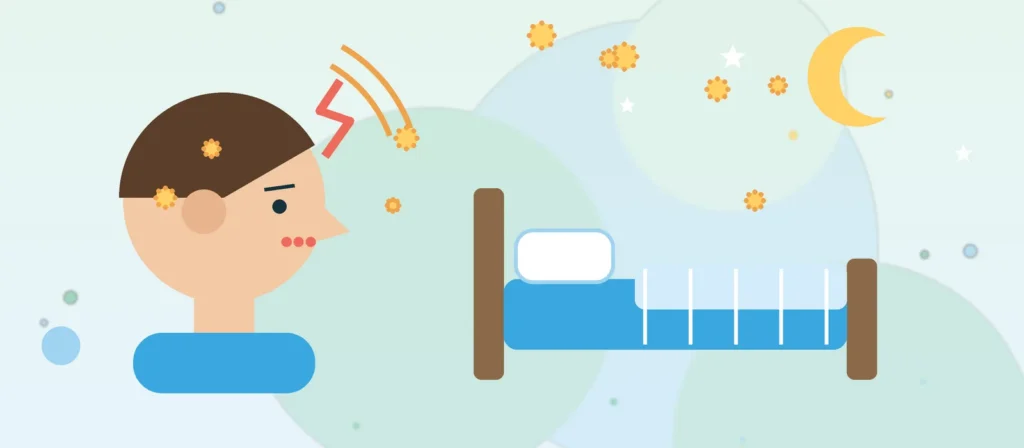
Allergies are usually described as a nose and eyes problem, but many people feel them most in two other places: a heavy, pressured head and a bad night of sleep. You wake up stuffy, you drag through the day, and by afternoon your face and forehead ache. This guide explains how allergies can lead to headaches and poor sleep, why a so-called sinus headache is often something else, and practical steps that help you breathe and sleep better during allergy season.
Key takeaways
- Allergic rhinitis (hay fever) can contribute to sinus problems and trouble sleeping, and fatigue is often reported because a blocked nose leads to poor-quality sleep (AAAAI) (ACAAI).
- Most people who think they have sinus headaches actually have migraines or tension-type headaches (Mayo Clinic). In one study of 2,991 people with a history of sinus headache, 88% met criteria for migraine-type headache (Schreiber 2004).
- Nasal steroid sprays reduce all hay fever symptoms, including stuffiness, while antihistamines may not help stuffiness as much (AAAAI).
- Older antihistamines such as diphenhydramine can cause drowsiness, and even a bedtime dose can impair you the next day (ACAAI).
How Allergies Disrupt Sleep
When you breathe in something you are allergic to, such as pollen, dust mites or pet dander, your immune system releases histamine and other chemicals. That leads to sneezing, a runny or stuffy nose, itching and postnasal drip (AAAAI). AAAAI notes that rhinitis can contribute to other problems, including sinus or ear conditions and trouble sleeping (AAAAI), and that hay fever can disrupt your sleep and affect your ability to learn at school or be productive at work (AAAAI).
Congestion is the main culprit. ACAAI lists fatigue as a hay fever symptom and notes it is often reported because nasal obstruction causes poor-quality sleep (ACAAI). A stuffy nose, sneezing or an itchy throat can make it harder to fall asleep and stay asleep. The effects carry into the next day. ACAAI links allergic rhinitis with decreased concentration and focus, problems remembering things, irritability, sleep disorders, fatigue and missed days of work or school (ACAAI).
Bedtime can also be when you get the biggest dose of allergens. Pollen you carry in from outside can bother you all night if it stays in your hair (AAAAI), and dust mites and pet dander collect in bedding, pillows and carpets. If your symptoms flare in the bedroom year-round, read our guide to dust allergies and what triggers them.
Can Allergies Cause Headaches?
Allergies can set the stage for head and face pain in a few ways. Swollen nasal tissue and congestion create pressure, and AAAAI notes that hay fever can lead to sinus infections (AAAAI). Poor sleep from a blocked nose can also leave you tired and foggy the next day (ACAAI). For people who get migraines, allergens may be a trigger. In a study of 100 adults who believed they had sinus headaches, most actually had migraine or probable migraine, and 62% of those with migraine named exposure to allergens as a trigger, along with weather changes and seasonal variation (SAMS 2007).
That last finding matters. A headache that shows up with your allergy season is not automatically a sinus headache. It may be a migraine that allergy season helps set off, and the treatment for that is different.
Sinus Headache or Migraine? How to Tell
Mayo Clinic describes sinus headaches as pain, pressure and fullness in the cheeks, brow or forehead that may get worse when you bend forward or lie down, sometimes with a stuffy nose, fatigue or an achy feeling in the upper teeth (Mayo Clinic). The problem is that migraines can look almost the same. Migraine can come with congestion, facial pressure and a clear, watery nasal discharge, and studies have shown that most people who see a provider for sinus headaches turn out to have migraines instead (Mayo Clinic).
The numbers back this up. In the Schreiber study, 88% of 2,991 patients with a history of self-described or doctor-diagnosed sinus headache, and no sign of infection, met criteria for migraine-type headache. The most common sinus-area symptoms they reported were sinus pressure (84%), sinus pain (82%) and nasal congestion (63%) (Schreiber 2004). In the smaller SAMS study, only 3% of people who thought they had sinus headaches had headache caused by rhinosinusitis (SAMS 2007).
Clues from Mayo Clinic that help separate the two (Mayo Clinic):
- Pointing toward a sinus infection: it follows a cold or viral infection, comes with thick, discolored mucus and a reduced sense of smell, may cause pain in one cheek or the upper teeth, and often lasts days or longer.
- Pointing toward migraine: nausea or vomiting, sensitivity to light or noise, clear and watery nasal drainage, and pain that usually lasts hours to a day or two.
Mayo Clinic also notes that most sinus headaches are not caused by sinus infections and generally should not be treated with antibiotics (Mayo Clinic). If you are not sure whether you are dealing with allergies or an infection, our guide to whether allergies cause a fever covers the signs that point to illness.
Treat the Congestion to Protect Your Sleep
Because congestion drives so much of the sleep problem, the best allergy treatment for better nights is usually the one that opens your nose. AAAAI describes the main options this way (AAAAI):
- Nasal corticosteroid sprays control inflammation and reduce all symptoms of allergic rhinitis, including itching, sneezing, runny nose and stuffiness. Our comparison of Flonase vs. Nasacort vs. Rhinocort explains how these common over-the-counter sprays differ.
- Antihistamines (pills, liquids or nasal sprays) may relieve itching, sneezing and runny nose, but may not be as effective for stuffiness. See Zyrtec vs. Claritin vs. Allegra for how the newer pills compare.
- Decongestants can be used as needed when stuffiness is not relieved by other medicines, but decongestant nasal sprays should not be used for more than three days because congestion can come back worse.
ACAAI adds that overusing decongestant sprays can cause rebound swelling of the nasal tissue, called rhinitis medicamentosa, leading to more frequent congestion (ACAAI). If you also use saline rinses, our guide to the best sinus rinses and saline sprays covers how to use them safely.
Be Careful With Sleepy Antihistamines
It is tempting to reach for an allergy pill that also makes you sleepy. Diphenhydramine (Benadryl) is used for allergy symptoms and is also used to treat insomnia in adults, but MedlinePlus says it should not be used to make a child sleepy (MedlinePlus). It can make you drowsy, alcohol adds to that drowsiness, and you should not drive or operate machinery until you know how it affects you (MedlinePlus). MedlinePlus also says diphenhydramine generally should not be used in older adults, except to manage serious allergic reactions, because it is not as safe or effective as other options (MedlinePlus).
ACAAI warns that older, first-generation antihistamines can cause drowsiness or performance impairment, and that even when taken only at bedtime they can still cause considerable impairment the following day, even in people who do not feel drowsy. Some newer antihistamines do not cause drowsiness (ACAAI). If you are weighing the newer options, our Xyzal vs. Zyrtec comparison looks at two popular options.
Ask before combining
Diphenhydramine is in many nighttime sleep aids and in some combination products, such as certain “PM” pain relievers (MedlinePlus). Check labels so you do not double up, and ask a pharmacist or doctor before mixing allergy, sleep and headache medicines.
Make Your Bedroom an Allergy-Friendly Zone
Cutting allergen exposure where you sleep can help both congestion and morning headaches. Steps recommended by allergy groups include:
- Shower before bed after time outdoors on high-pollen days, so pollen in your hair does not bother you all night (AAAAI).
- Keep windows closed during high pollen periods and use air conditioning instead (ACAAI).
- Cover the bed. Use mite-proof covers for pillows, comforters, mattresses and box springs, and wash bedding often in hot water of at least 130°F (ACAAI). Our guide to allergy bedding and mattress encasements explains what to look for.
- Keep pets out of the bedroom so you are not exposed to pet allergens while you sleep (ACAAI).
- Control humidity. Keep indoor humidity between 30 and 50 percent to limit mold (ACAAI).
If your nights get worse once the house is closed up for winter, our article on dust mite allergy in winter explains why and what helps.
When to See a Doctor or Allergist
See a doctor if your headaches happen more than 15 days a month or need frequent over-the-counter pain medicine, if a severe headache is not helped by over-the-counter medicine, or if headaches cause you to miss school or work or interfere with daily life (Mayo Clinic). A doctor can check whether you are dealing with migraine, a sinus infection or something else.
If allergies are wrecking your sleep despite home steps and over-the-counter medicine, an allergist can find your triggers. Our allergy testing guide explains skin and blood tests. ACAAI says immunotherapy may be recommended for people who do not respond well to medicines, who have side effects from them, or who cannot avoid their triggers (ACAAI). Learn more about allergy immunotherapy, or use our Find an Allergist directory to find one near you.
Written by: SeasonalAllergies.org Editorial Team (November 17, 2026)
This article is for general education and is not medical advice. Talk with your doctor or an allergist about your symptoms before starting, stopping or changing any treatment.
Allergy Headaches and Sleep FAQs
Can allergies make you tired even if you sleep all night?
Yes. ACAAI notes that fatigue from hay fever is often due to poor-quality sleep caused by nasal obstruction, so you may spend enough hours in bed without sleeping well (ACAAI). Older antihistamines taken at bedtime can also leave you impaired the next day (ACAAI).
Is my sinus headache really a migraine?
It may be. Mayo Clinic says most people who see a provider for sinus headaches are found to have migraines instead (Mayo Clinic). Nausea, light or noise sensitivity and clear nasal drainage point toward migraine, while thick, discolored mucus after a cold points toward a sinus infection.
What allergy medicine is best for a stuffy nose at night?
AAAAI says nasal corticosteroid sprays reduce all hay fever symptoms, including stuffiness, while antihistamines may not help stuffiness as much (AAAAI). Decongestant nasal sprays should be limited to three days to avoid rebound congestion. Ask your doctor or pharmacist which option fits you.
Is it safe to take Benadryl to sleep during allergy season?
MedlinePlus says diphenhydramine can cause drowsiness, should not be used to make a child sleepy and generally should not be used in older adults except for serious allergic reactions (MedlinePlus). ACAAI notes that newer antihistamines may not cause drowsiness (ACAAI). Talk with a doctor before using any medicine as a sleep aid.
Related Guides
Local pollen and allergist guides
Pollen seasons and triggers change by city. See what is in the air near you and where to find an allergist.
City pollen guides
Sources
- American Academy of Allergy, Asthma & Immunology. “Rhinitis (Hay Fever).”
https://www.aaaai.org/tools-for-the-public/conditions-library/allergies/rhinitis-(hay-fever) - American College of Allergy, Asthma & Immunology. “Hay Fever.”
https://acaai.org/allergies/allergic-conditions/hay-fever/ - Mayo Clinic. “Sinus Headaches: Symptoms and Causes.”
https://www.mayoclinic.org/diseases-conditions/sinus-headaches/symptoms-causes/syc-20377580 - Schreiber CP, et al. “Prevalence of Migraine in Patients With a History of Self-reported or Physician-Diagnosed ‘Sinus’ Headache.” Archives of Internal Medicine, 2004. PubMed 15364670.
https://pubmed.ncbi.nlm.nih.gov/15364670/ - American Academy of Allergy, Asthma & Immunology. “Spring Allergies.”
https://www.aaaai.org/tools-for-the-public/conditions-library/allergies/spring-allergies - Eross E, Dodick D, Eross M. “The Sinus, Allergy and Migraine Study (SAMS).” Headache, 2007. PubMed 17300361.
https://pubmed.ncbi.nlm.nih.gov/17300361/ - MedlinePlus, U.S. National Library of Medicine. “Diphenhydramine.”
https://medlineplus.gov/druginfo/meds/a682539.html
🌼 Free pollen alerts
Short, sourced alerts when oak, grass, ragweed or mold season picks up near you. Sign up and get our free printable US and Florida pollen calendar.
Free printable pollen calendar included. No spam. Unsubscribe anytime.